October 2026
English listening exercises for beginners
You don’t need to understand every word on the first listen. Start with a short sentence, listen again, and use what you discover to make the next one a little easier.
Start with English you can replay
At A1, familiar topics such as food, family, shopping and daily routines give you clues about what you are hearing. Choose a short recording with clear speech and a transcript or answer you can check. One sentence you can replay is a useful place to begin.
Try to catch the meaning first. If you hear “I have coffee in the morning”, you might notice coffee and morning before you hear the smaller words. That is a good start: each replay gives you another chance to fill the gaps.
Try a sentence in four steps
Dictation means listening and writing what you hear. It helps you see the difference between what you thought you heard and what was actually said.
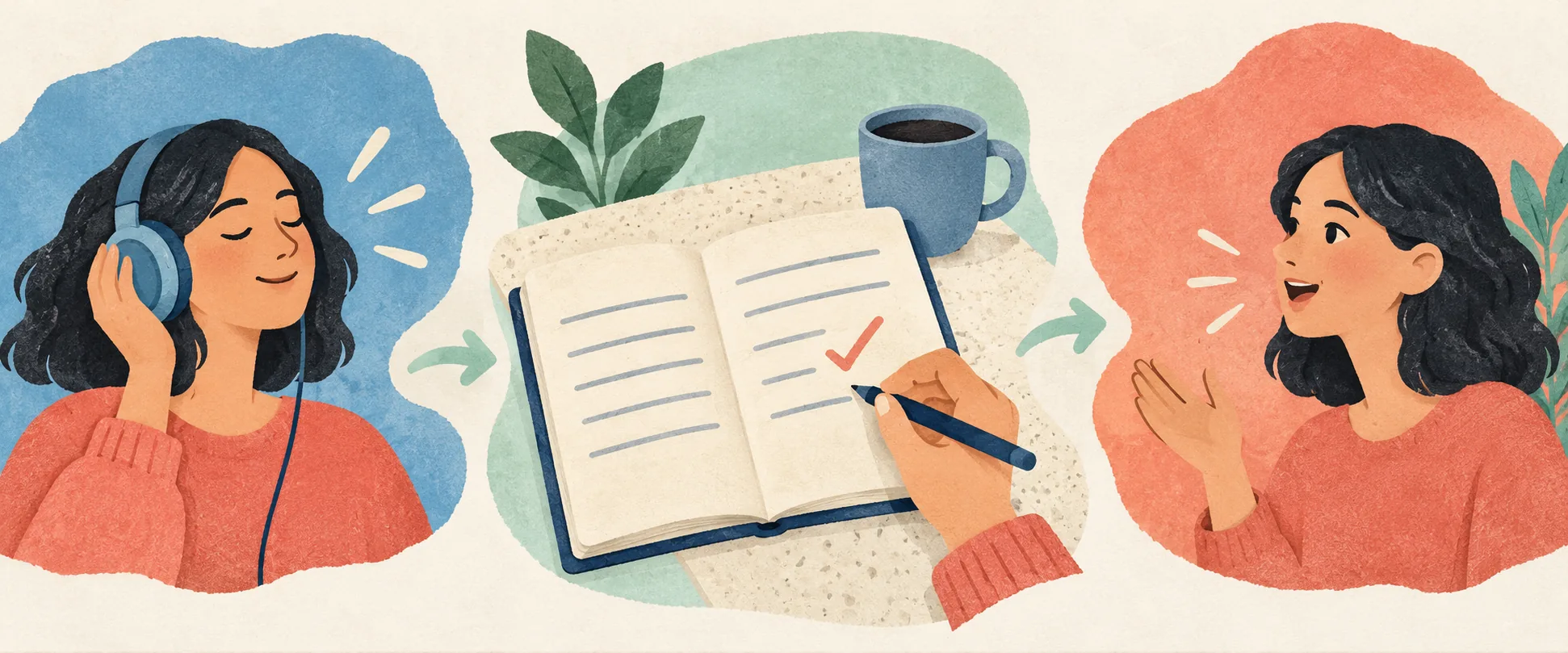
- Listen onceWhat is the sentence about? Don’t worry about writing everything yet.
- Listen againWrite the words you know, leaving a space for anything you miss.
- Replay and check: Fill the gaps, then compare your answer with the text. Notice one sound or word you missed.
- Listen once more: Follow the text as you listen, then try saying the sentence aloud.
Build a small daily habit
A few focused minutes can fit into a busy day. Start with one sentence, then spend five to ten minutes on a short dictation if you have time. It is fine to pause, replay and come back later.
Keep a note of one thing you want to hear next time: perhaps a small word, a verb ending or a new expression. Later in the week, try an unfamiliar sentence as well as revisiting an old one, so you can see what you understand without relying on memory.
What to do when English sounds too fast
Spoken words do not always sound as separate as they look on the page. Speakers connect words, and familiar little words can be quieter than the important ones. This takes practice, even when you already know the vocabulary.
- Listen for key words first: a person, place, action or time can help you understand the situation.
- Replay a short part: focus on one gap at a time instead of starting over with the whole recording.
- Check the text: listen again while reading and notice how the words fit the sound.
- Choose easier material if you are guessing most of the sentence. You can return to harder audio later.
Choose podcasts and stories you can follow
Look for short recordings made for learners, with a familiar topic, clear speech and a transcript. A story gives you context across several sentences; a single sentence lets you focus closely on individual words. Both can be useful.
Listen once for the general idea, then use the transcript to check a small section. You do not need to understand a whole podcast before you move on. Choose a piece that is challenging but still gives you something you can follow.
When should you try A2?
If unfamiliar A1 sentences usually make sense and you can write most of them after a few listens, try an A2 exercise. You can move between levels: a more difficult topic may still call for A1, while a familiar one feels comfortable at A2.
The level test can suggest a starting point for listening practice. It is a guide, not an official CEFR certificate or a complete assessment of your English.
Questions from beginners
What are good listening exercises for beginners?
Start with short sentences or stories about familiar topics. Listen, write what you hear, and check the text. A1 dictations let you replay each sentence as often as you need.
How long should I practise each day?
Start with a few minutes you can return to regularly. Five to ten focused minutes is a useful routine, but the right amount depends on your time and attention.
Should I read the text while listening?
Try listening without it first, then use the text to check what you missed. Listening again while reading can help you connect the written words to their sounds.
Is dictation too hard for beginners?
Start with a short A1 sentence and replay it as needed. Write the words you recognise first and use the answer to learn from the gaps.