oktober 2026
The schwa sound and weak forms
The schwa is the short, relaxed “uh” in words like about, sofa and banana. It is the most common vowel sound in English, and it is why small words such as “to”, “of” and “and” almost disappear when people speak.
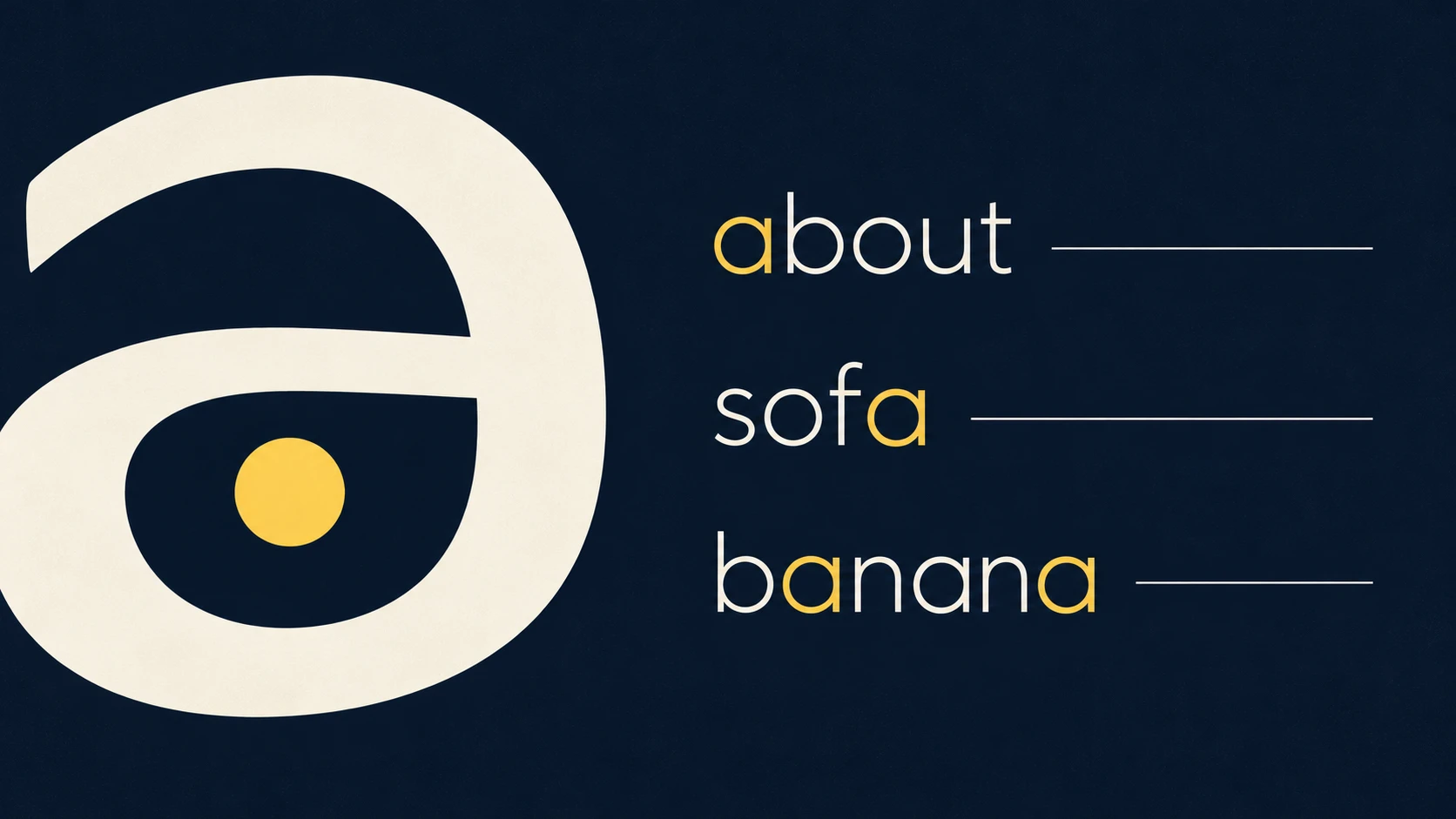
What is the schwa sound?
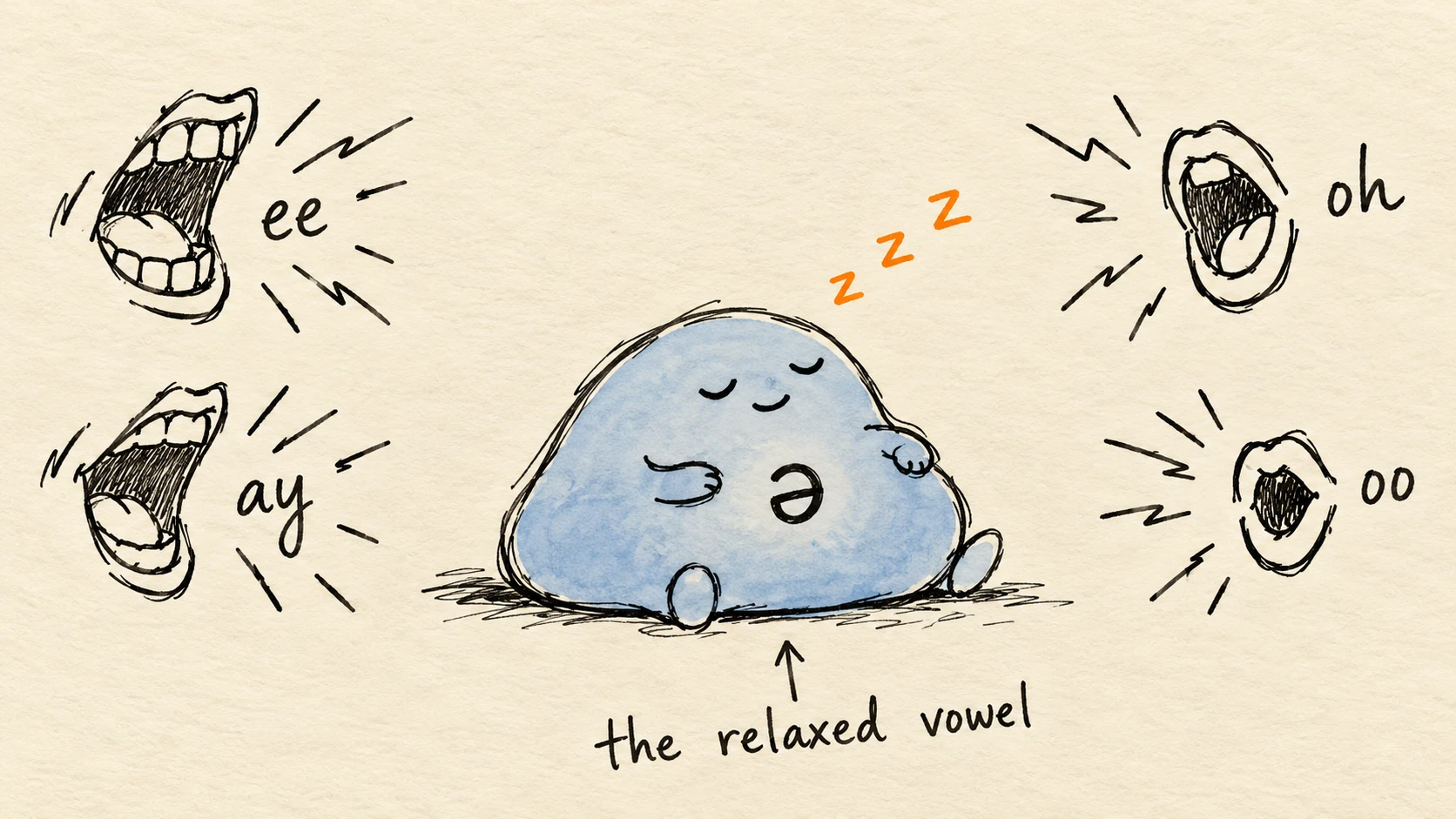
The schwa, written /ə/, is a short, quiet, unstressed vowel: the “uh” at the start of “about” or at the end of “sofa”. Your mouth is relaxed and your tongue rests in the middle, so it is the easiest vowel to make.
- about
- sofa
- banana
- support
No letter is reserved for it. English stresses some syllables and rushes through the others, and a rushed syllable loses its full vowel and becomes a schwa, whatever letter it is spelled with.
Schwa words: examples
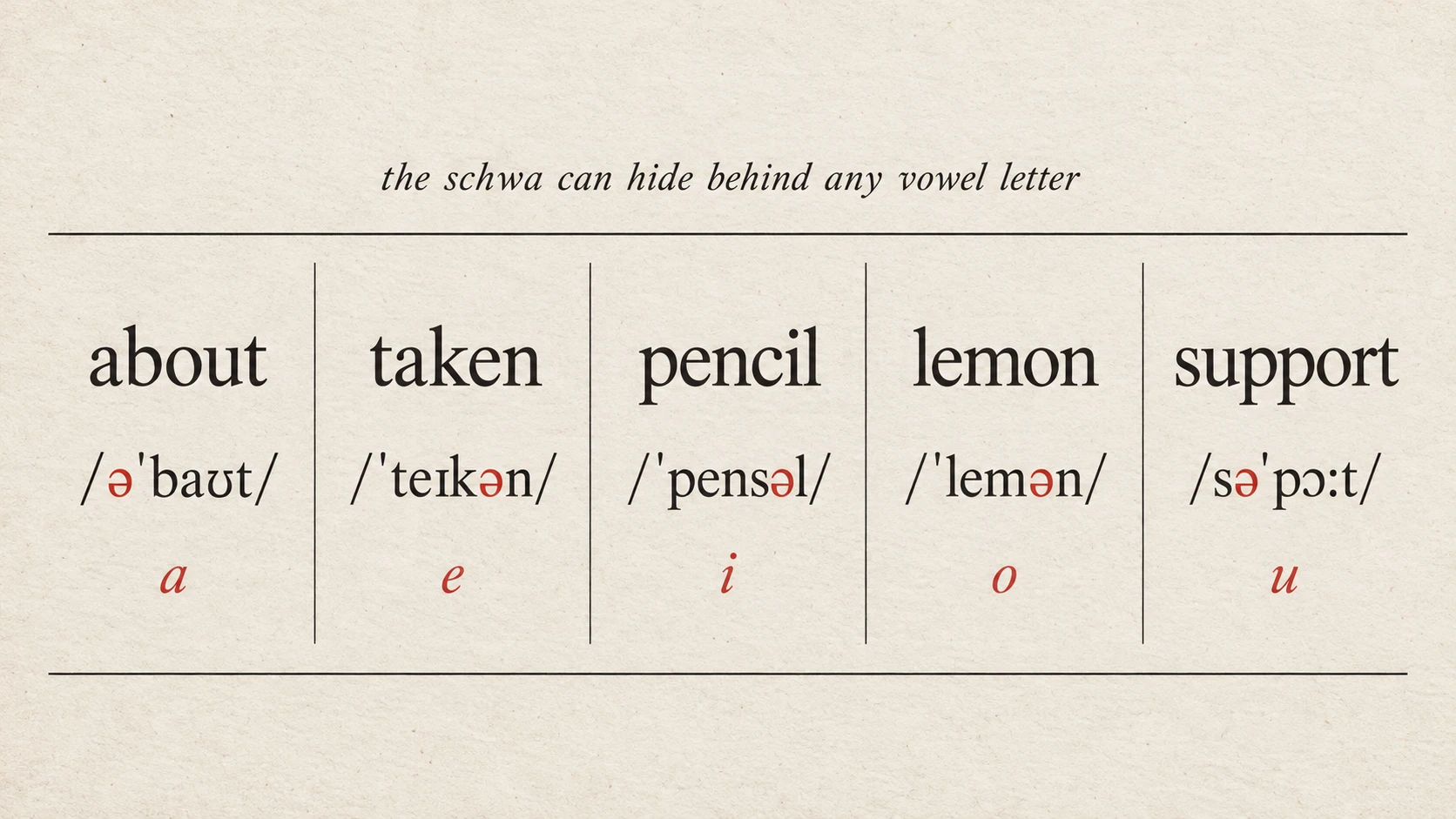
Any vowel letter can stand for the schwa. In each word below, the vowel letter before the colon is pronounced as a schwa, not with its own name.
- aabout, again, banana, sofa, pizza, Canada
- etaken, problem, children, open
- ipencil, family, possible
- olemon, today, police, computer
- usupport, supply, circus
- -er and -or endings (in British English): teacher, mother, doctor, water
Why English has so many schwas
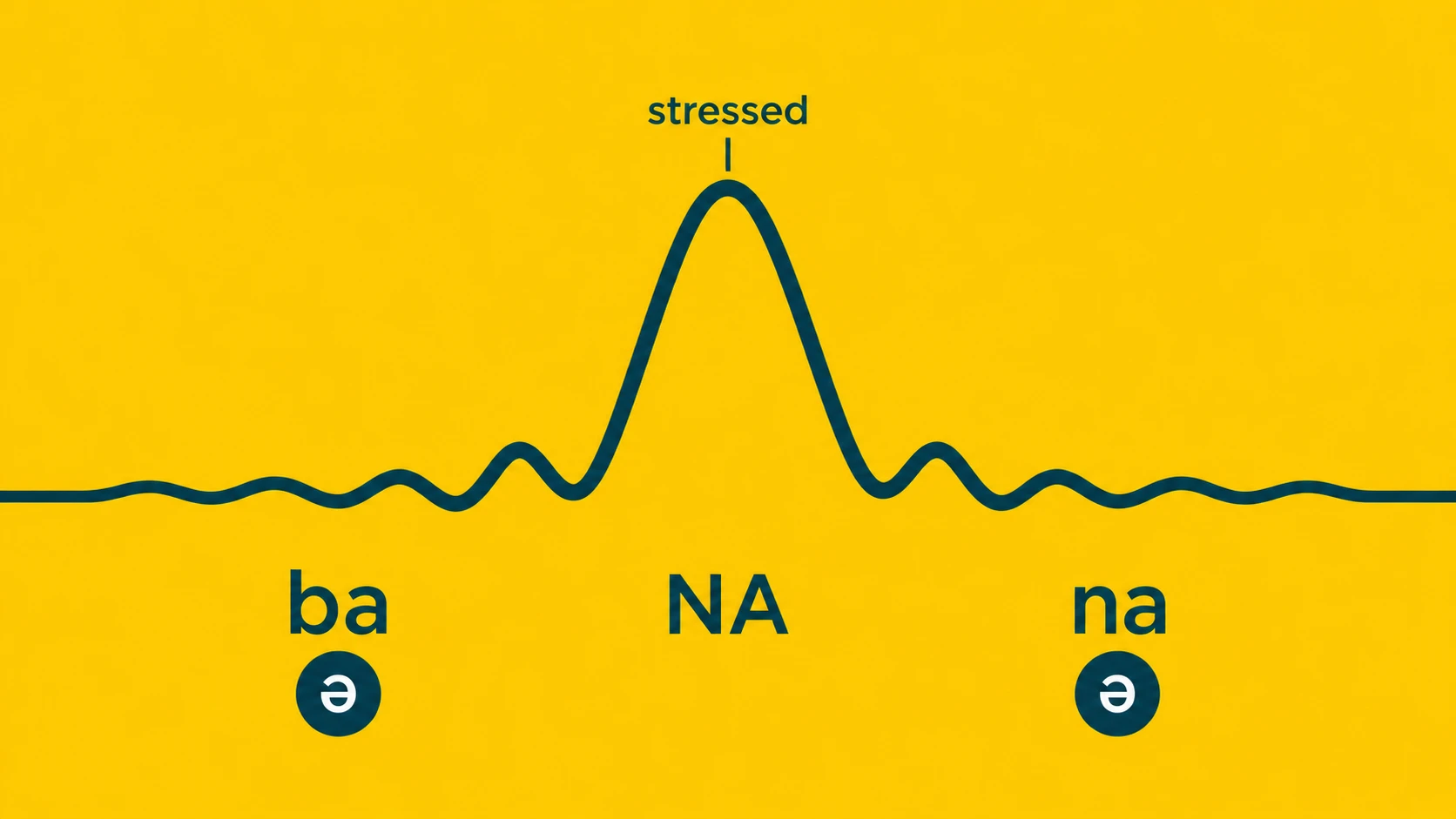
English rhythm is built on stress: the stressed syllables come at a steady beat, and the unstressed ones are squeezed in between. A squeezed syllable has no time for a full vowel, so it turns into a schwa. “Banana” is ba-NA-na: only the middle syllable is stressed, and the other two are both /ə/.
Move the stress and the schwa moves with it. In “photograph” the first syllable is stressed, and the second “o” is a schwa. In “photography” the stress jumps to the second syllable, and now it is the first “o” that becomes a schwa.
Weak forms: the schwa in small words
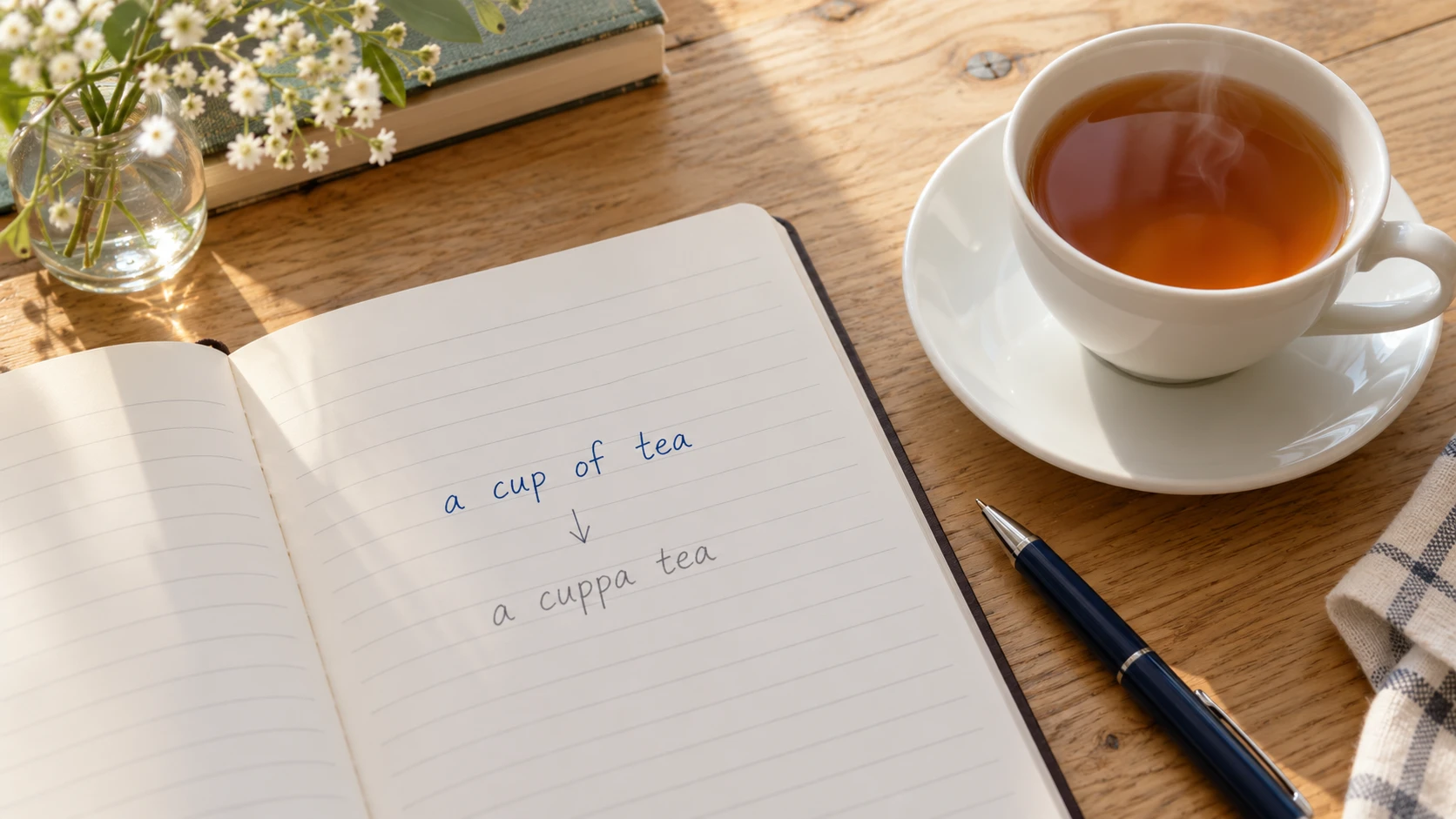
Grammar words such as “to”, “of”, “and”, “for” and “can” are usually not stressed, so they take their weak form, built on the schwa. “A cup of tea” sounds like “a cuppa tea”, “fish and chips” like “fish ’n’ chips”, and “I can swim” like “I c’n swim”.
Listen to these four sentences: every small word is there, but short and quiet.
- A cup of tea, please.
- Fish and chips.
- Wait for me.
- I want to go home.
- to → /tə/“I want to go” sounds like “I wanna go” in fast speech.
- of → /əv/ or just /ə/: “a lot of people” → “a lotta people”.
- and → /ən/ or /n/: “rock and roll” → “rock ’n’ roll”.
- for → /fə/“wait for me” → “wait fə me”.
- can → /kən/“I can come” → “I c’n come” (but “can’t” keeps its full vowel).
- was, were → /wəz/, /wə/: “It was late” → “It wəz late”.
- have, has → /əv/, /əz/: “should have” → “should’ve”, often heard as “shoulda”.
- a, the, at, from, them → /ə/, /ðə/, /ət/, /frəm/, /ðəm/.
Strong forms: when small words keep their vowel
A weak form is the normal way to say a small word, but the full vowel comes back when the word is stressed. That happens at the end of a sentence (“Where are you from?”), in a short answer (“Yes, I can.”) and when you want to stress the word itself. The word is the same; only the stress is different.
In each pair below, the small word is stressed on the left and weak on the right. Listen to “from”, “for”, “can” and “at”.
- Where are you from?
- I’m from Spain.
- Who is it for?
- It’s for you.
- Yes, I can.
- I can swim.
- What are you looking at?
- Look at me.
- At the end of a sentence: “What are you looking at?” (full /æt/) but “Look at me.” (weak /ət/).
- In a short answer: “Yes, I can.” (full /kæn/) but “I can swim.” (weak /kən/).
- “Can’t” always keeps its full vowel, so “I c’n come” and “I can’t come” differ in the vowel as well as the last sound.
What learners miss most
Learners most often leave weak forms out altogether when they write down what they hear: “I want go home” instead of “I want to go home”, or “a cup tea” instead of “a cup of tea”. The meaning comes through, so the ear skips the small word.
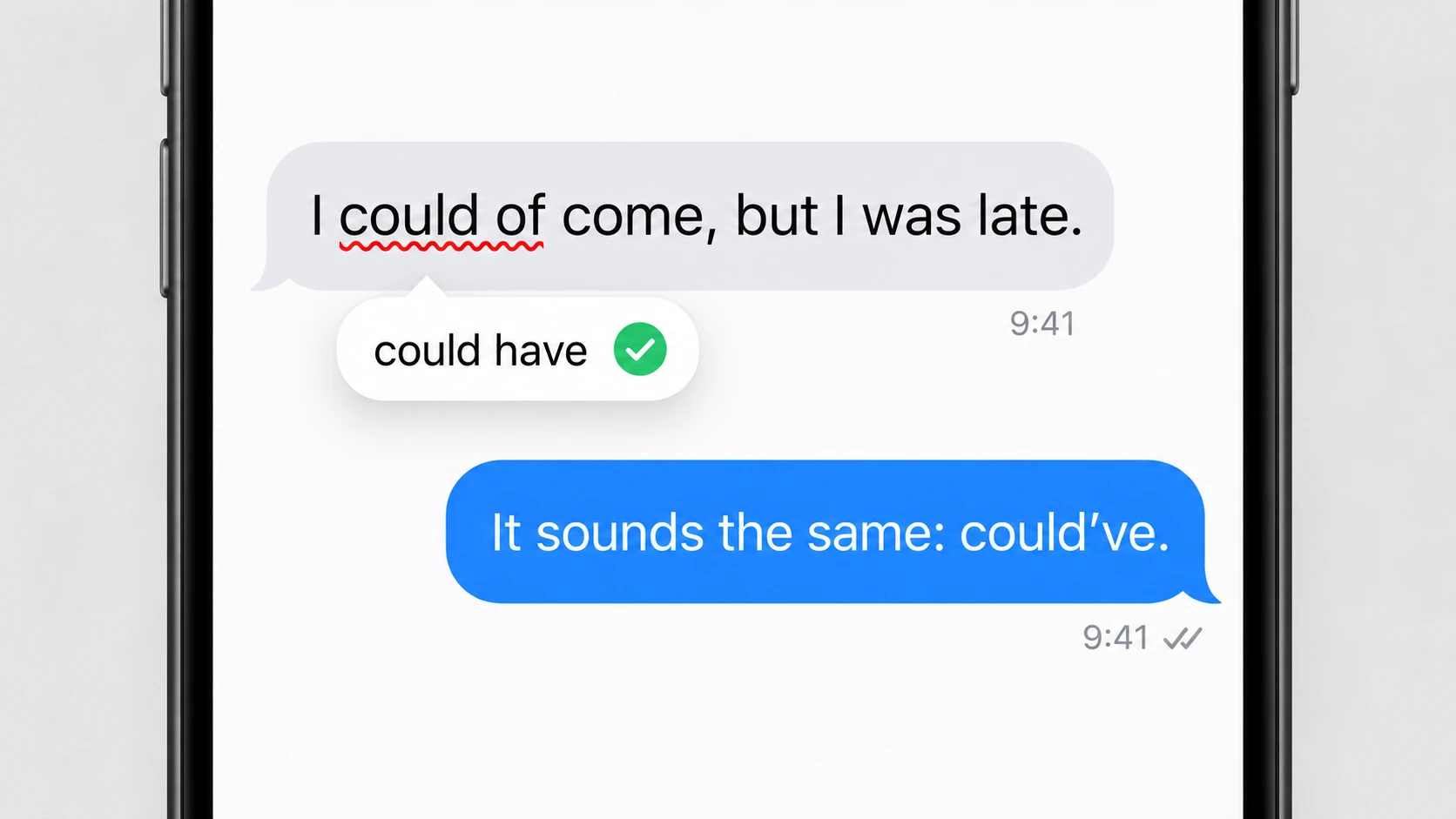
The other common slip is mixing up weak forms that sound alike, such as “of” and “have” (“could of” for “could have”) or “a” and “the”. “Could’ve” and “could of” sound the same, but only “could have” is correct.
How to hear the schwa and weak forms
- Find the stress first: the stressed syllables are clear, the schwas are the quick ones between them.
- Expect small words: when two stressed words come with a short gap, a weak form is probably hiding in it.
- Use grammar“want … go” needs “to”; “a lot … people” needs “of”.
- Say it yourself: copying the rhythm, schwas included, trains your ear faster than listening alone.
- Write down what you hear: dictation shows every small word you missed.
Test yourself
Each sentence below is missing one small word, the kind that hides in fast speech. Play it, decide which word is missing, then tap the gap to check.
- I want go home.
- A cup tea, please.
- Fish chips is my favourite.
- Wait me at the door.
- You should asked.
- It very late when we arrived.
- I bought a loaf bread.
- I come Spain.
Questions about the schwa
What is a schwa sound?
A short, relaxed, unstressed vowel, written /ə/, like the “a” in “about” or the “a” at the end of “sofa”. It is the most common vowel sound in English.
Which letters make the schwa sound?
Any vowel letter can: a in “about”, e in “taken”, i in “pencil”, o in “lemon”, u in “support”. What matters is that the syllable is unstressed.
What are weak forms?
The reduced, schwa-based pronunciation of small grammar words, such as “to” as /tə/ and “of” as /əv/. They are used whenever these words are not stressed, which is most of the time.
Do native speakers always use weak forms?
In normal speech, yes. Grammar words take their full form only when they are stressed, at the end of a sentence (“Where are you from?”) or said on their own.
Is the schwa the same as the “u” in “cup”?
They are close, but not the same. The vowel in “cup” (/ʌ/) is stressed, longer and a little more open. The schwa is always unstressed and shorter, like the first sound of “about”.