Οκτώβριος 2026
Contractions in English
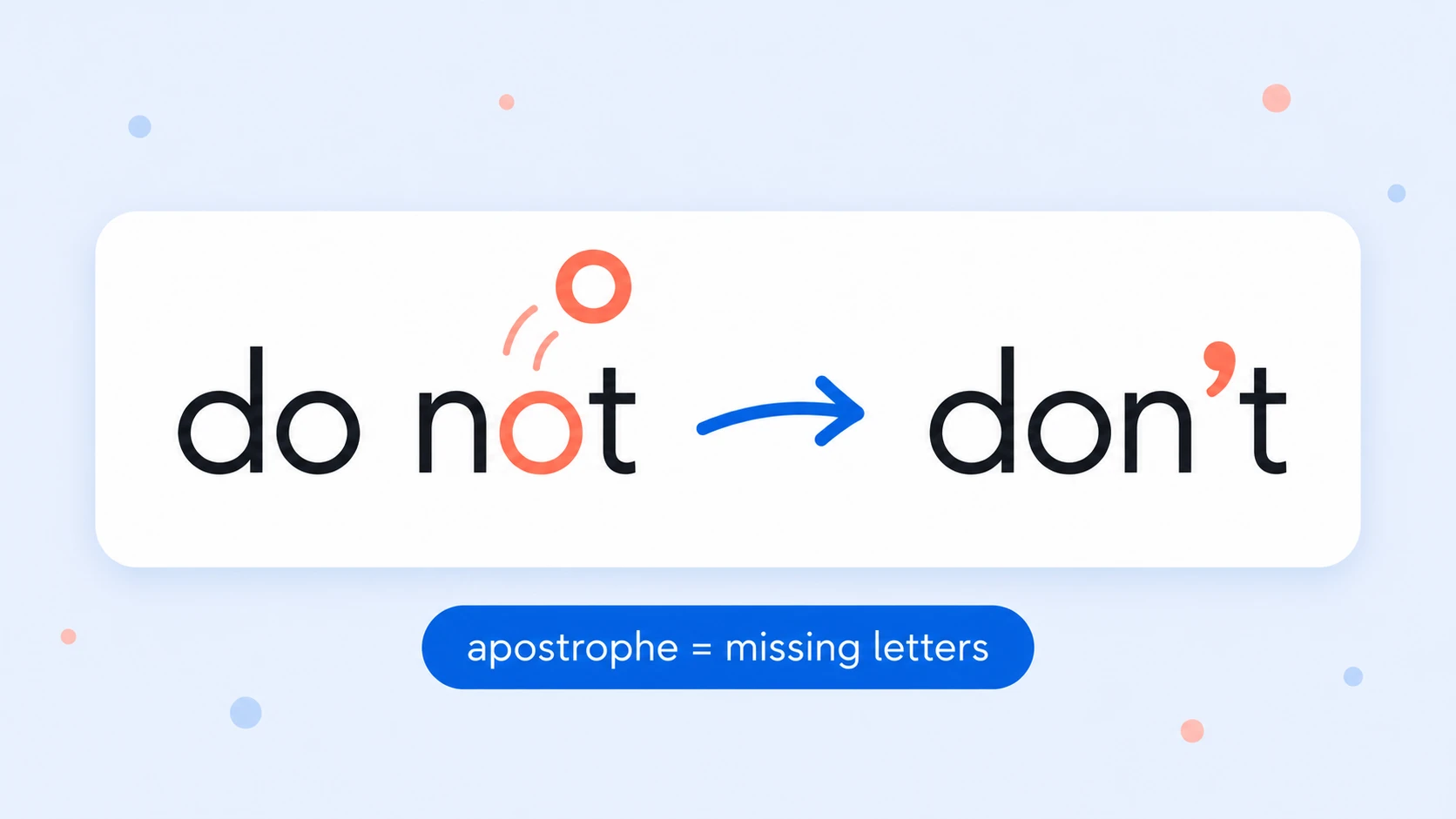
A contraction joins two words into one shorter word, with an apostrophe where letters are left out: “I am” becomes “I’m”, “do not” becomes “don’t”. They are everywhere in spoken English, and they are short and quick, so they are easy to miss.
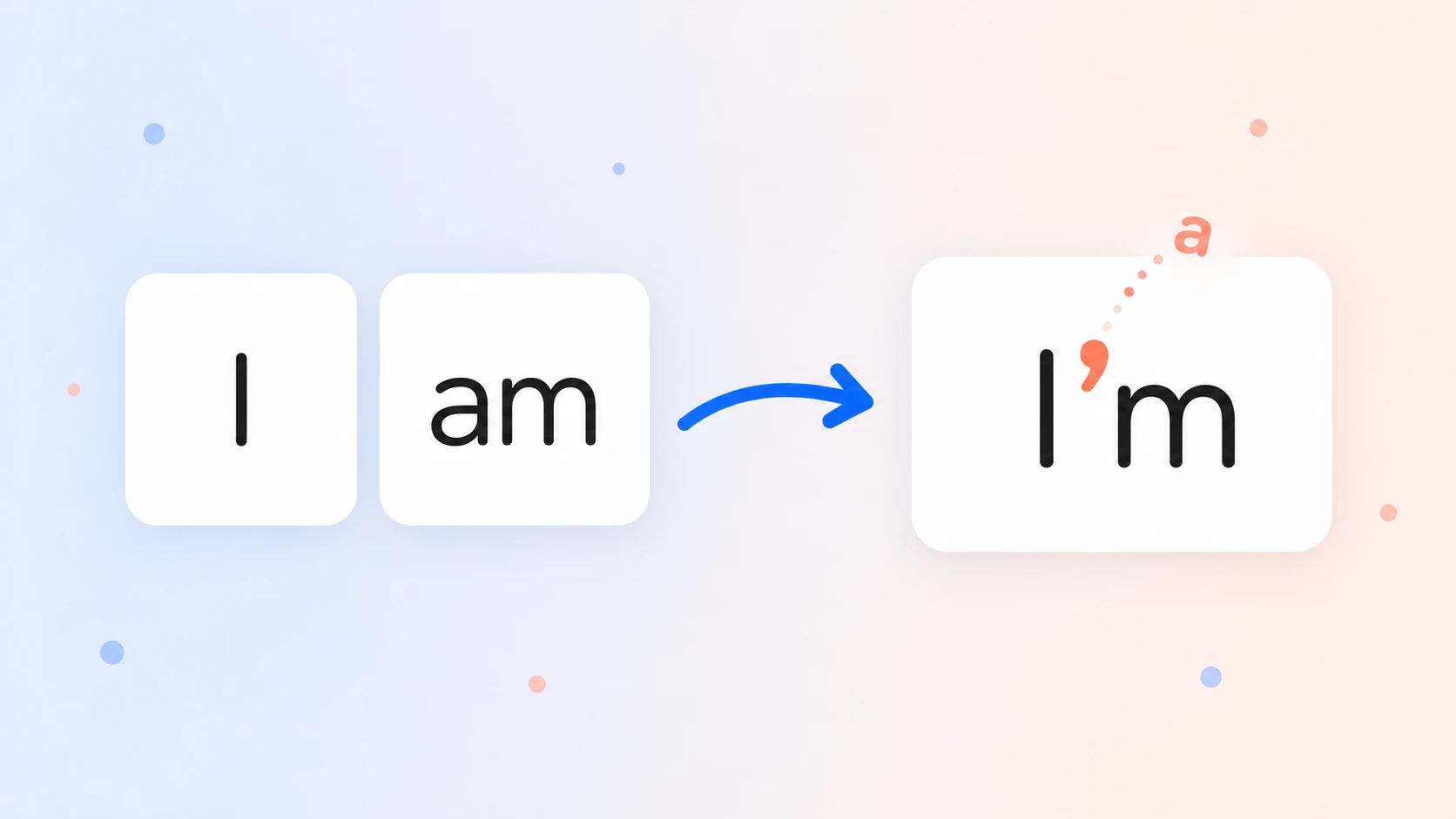
What is a contraction?
A contraction is a short form of two words, usually a pronoun or noun with a verb (“she is” → “she’s”), or a verb with “not” (“is not” → “isn’t”). The apostrophe shows where letters were removed.
- I am going home.
- I’m going home.
- They will call you.
- They’ll call you.
- It is not ready.
- It isn’t ready.
List of English contractions
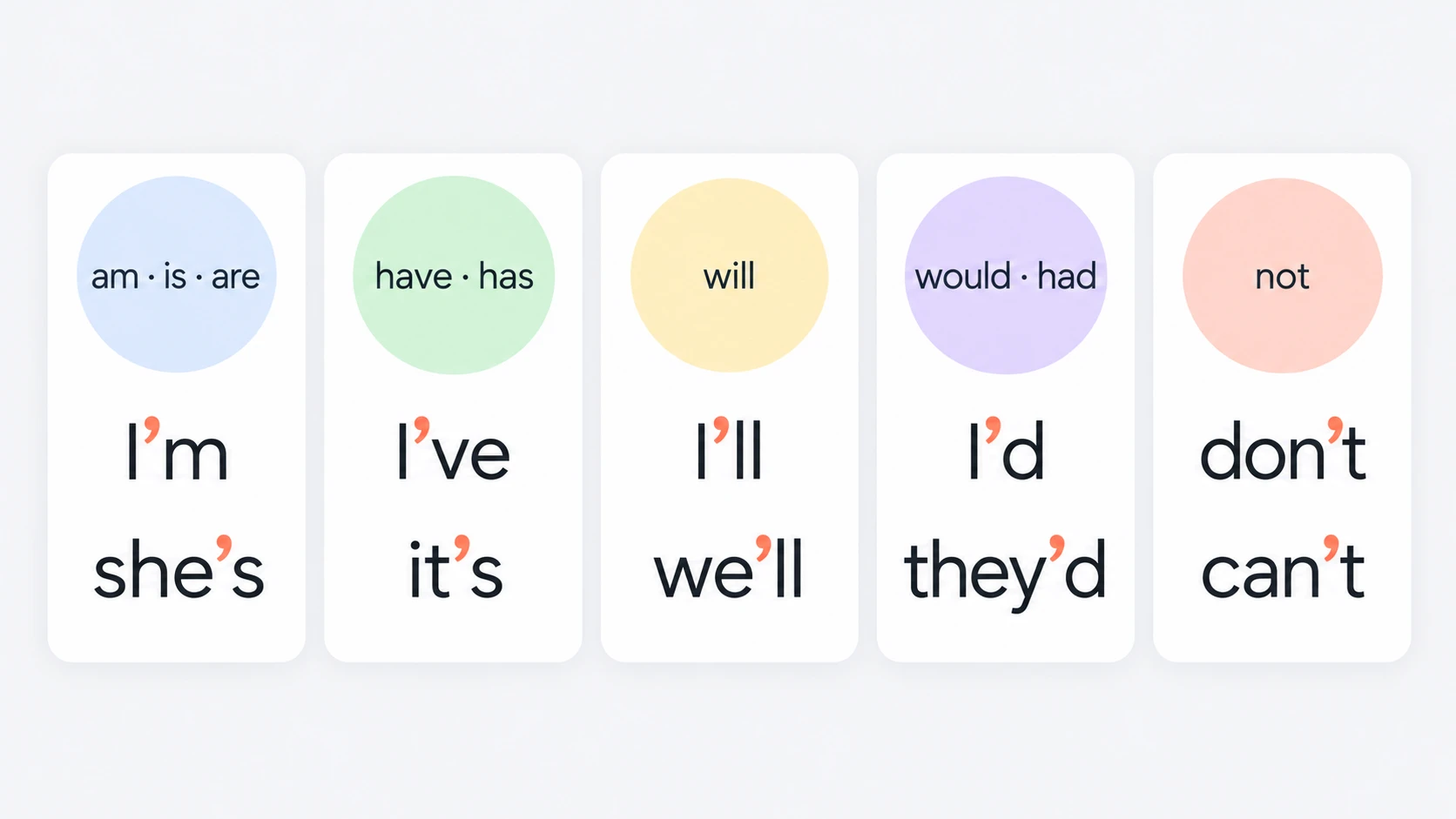
- am, is, areI’m, you’re, he’s, she’s, it’s, we’re, they’re, that’s, there’s, what’s, who’s
- have, hasI’ve, you’ve, we’ve, they’ve, he’s (has), she’s (has), it’s (has)
- willI’ll, you’ll, he’ll, she’ll, it’ll, we’ll, they’ll
- would, hadI’d, you’d, he’d, she’d, we’d, they’d
- notisn’t, aren’t, wasn’t, weren’t, don’t, doesn’t, didn’t, haven’t, hasn’t, hadn’t, can’t, couldn’t, won’t, wouldn’t, shouldn’t, mustn’t
- Otherslet’s (let us), ma’am (madam), o’clock (of the clock)
Rules for using contractions
- The apostrophe goes where the letters were left out: do not → don’t, not do’nt.
- Use them in speech, emails, messages and most everyday writing; avoid them in very formal writing.
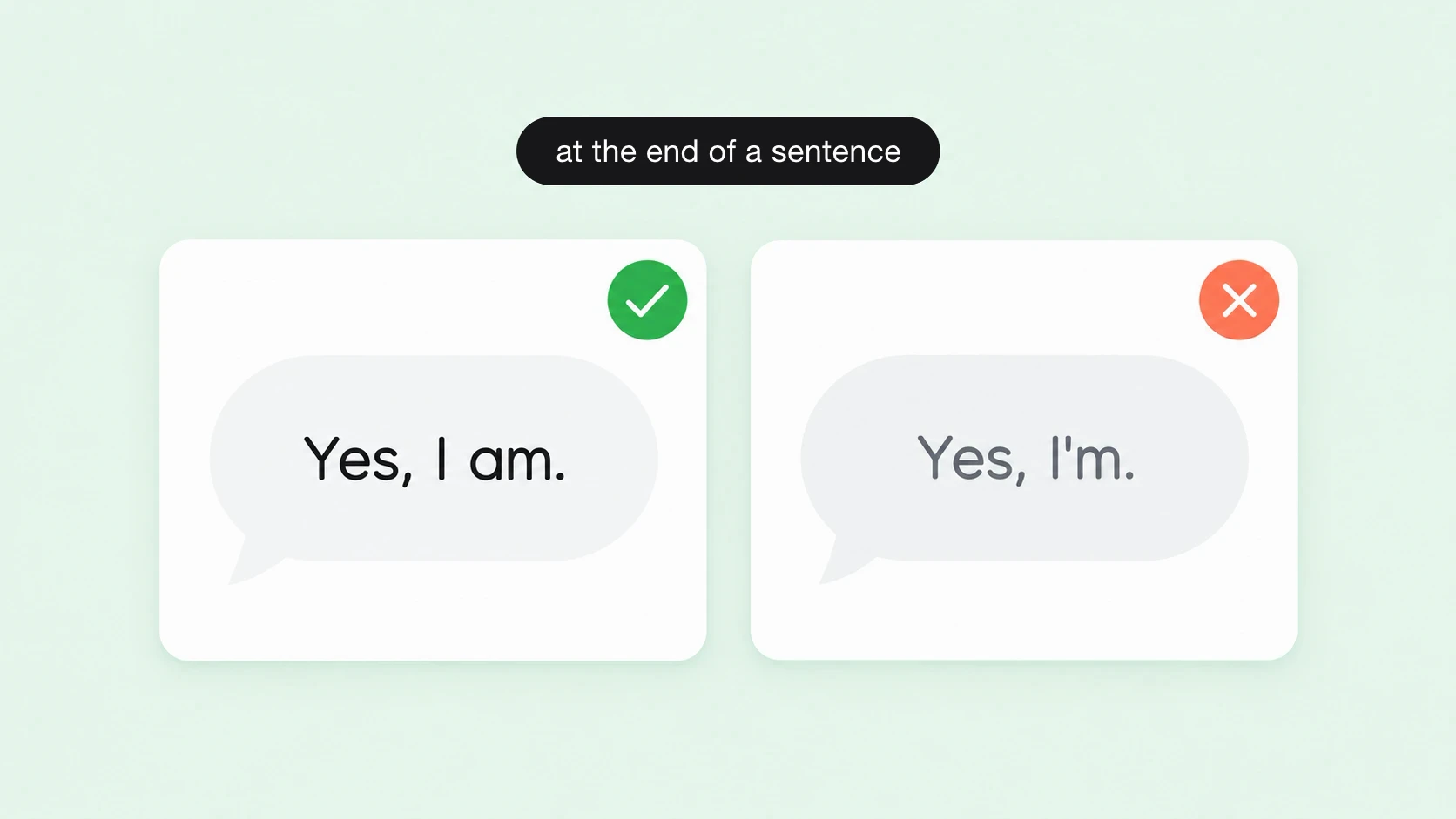
- Don’t use a positive contraction at the end of a sentence: “Yes, I am”, not “Yes, I’m” (negative ones are fine: “No, I don’t”).
- Some are irregular: will not → won’t, cannot → can’t, shall not → shan’t.
- Don’t confuse contractions with possessives: it’s (it is) vs its, you’re (you are) vs your, they’re (they are) vs their.
Contractions that are hard to hear
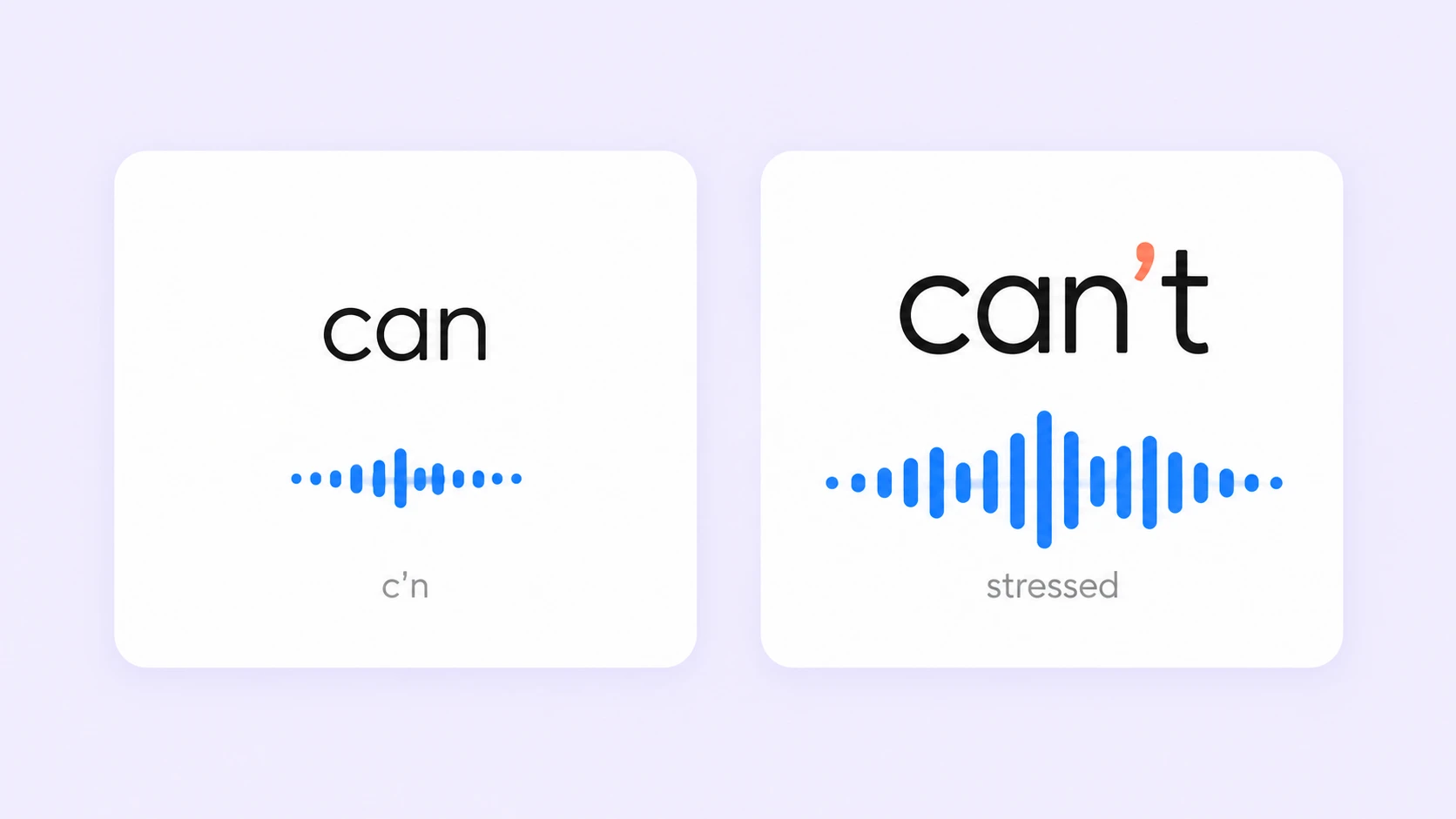
Can and can’t: “can” is usually weak and quick (“I c’n come”), while “can’t” keeps its full vowel and is often stressed. Listen to the vowel and the stress rather than waiting for the “t”, which is often hardly said.
- I can come tomorrow.
- I can’t come tomorrow.
- She can swim.
- She can’t swim.
- We can help you.
- We can’t help you.
’s can mean “is” or “has”: “He’s working” (is), “He’s finished” (has). ’d can mean “would” or “had”: “I’d like” (would), “I’d left” (had). The next word tells you which.
- He’s working. (is)
- He’s finished. (has)
- I’d like a coffee. (would)
- I’d left already. (had)
Gonna, wanna, gotta
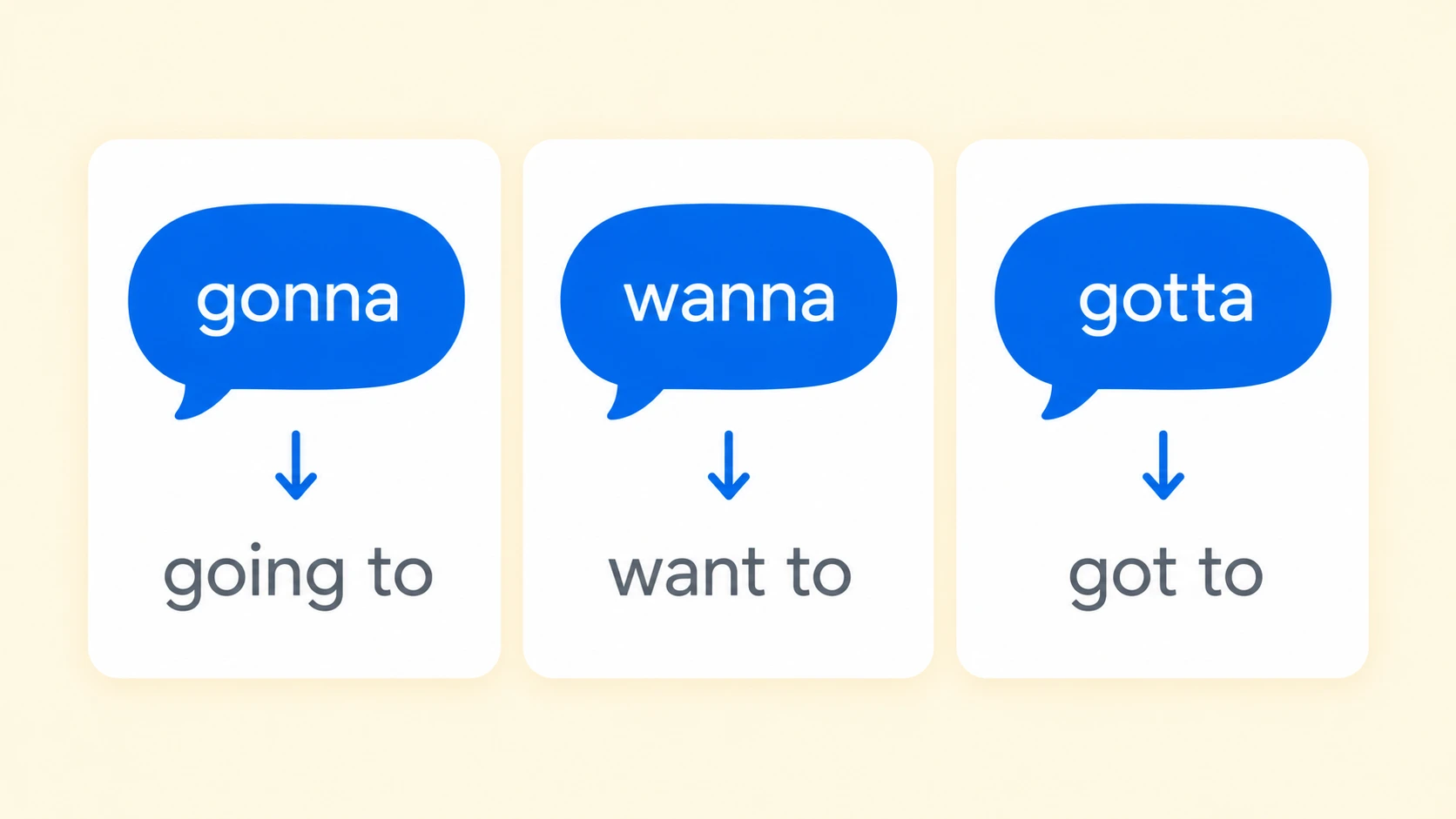
In informal speech, some phrases shrink even further: “going to” → gonna, “want to” → wanna, “got to” → gotta, “kind of” → kinda, “let me” → lemme, “don’t know” → dunno. They are not standard spelling, but you will hear them everywhere in films, songs and conversation. In a dictation, write the full form.
- I’m gonna be late. (going to)
- I wanna go home. (want to)
- I’ve gotta go. (got to)
What learners miss most
When writing down speech, learners often drop the contraction entirely: “I going” for “I’m going”, “She finished” for “She’s finished”. Mixing up “can” and “can’t” is also common, and it flips the meaning.
Questions about contractions
What are contractions in English?
Short forms of two words joined with an apostrophe, such as “I’m” (I am), “don’t” (do not) and “they’ll” (they will).
Are contractions informal?
Contractions like “I’m” and “don’t” are normal in speech and in most writing; only very formal writing avoids them. Forms like “gonna” and “wanna” are informal and usually only spoken.
How do I hear the difference between “can” and “can’t”?
Listen to the vowel and the stress. “Can” is usually short and unstressed (“c’n”); “can’t” has a longer, clearer vowel and is often stressed.
Is “gonna” a contraction?
It is an informal reduced form of “going to”, used in speech. It isn’t written with an apostrophe and isn’t used in formal writing.