অক্টোবর ২০২৬
Homophones: meaning and examples
Homophones are words that sound the same but have different meanings, and usually different spellings: “flour” and “flower”, “hour” and “our”. When you speak, the sentence tells the listener which one you mean. When you write, and in a dictation, you have to choose the spelling yourself.
How homophones work
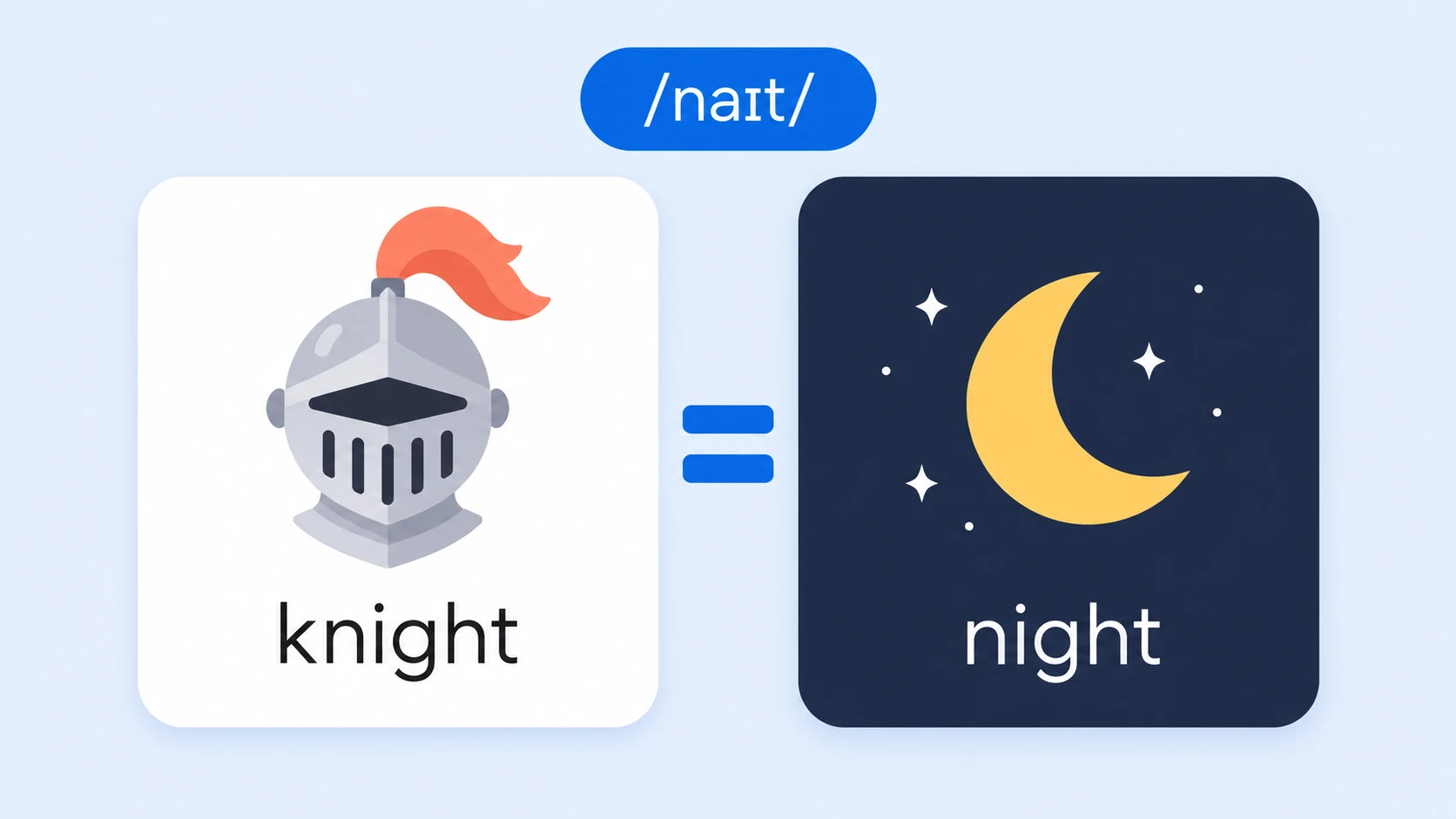
The name comes from Greek “homo” (same) and “phone” (sound). Homophones share every sound and the same stress, so nothing in how they are said tells them apart. Most come in pairs, like “knight” and “night”; some in threes, like “buy”, “by” and “bye”; and a few in fours, like “right”, “write”, “rite” and “wright”.
Homophones, homonyms and homographs
These three words are easy to mix up too. The difference is whether the spelling, the sound, or both are the same.
- homophonessame sound, usually a different spelling: a dog’s “tail” and a fairy “tale”.
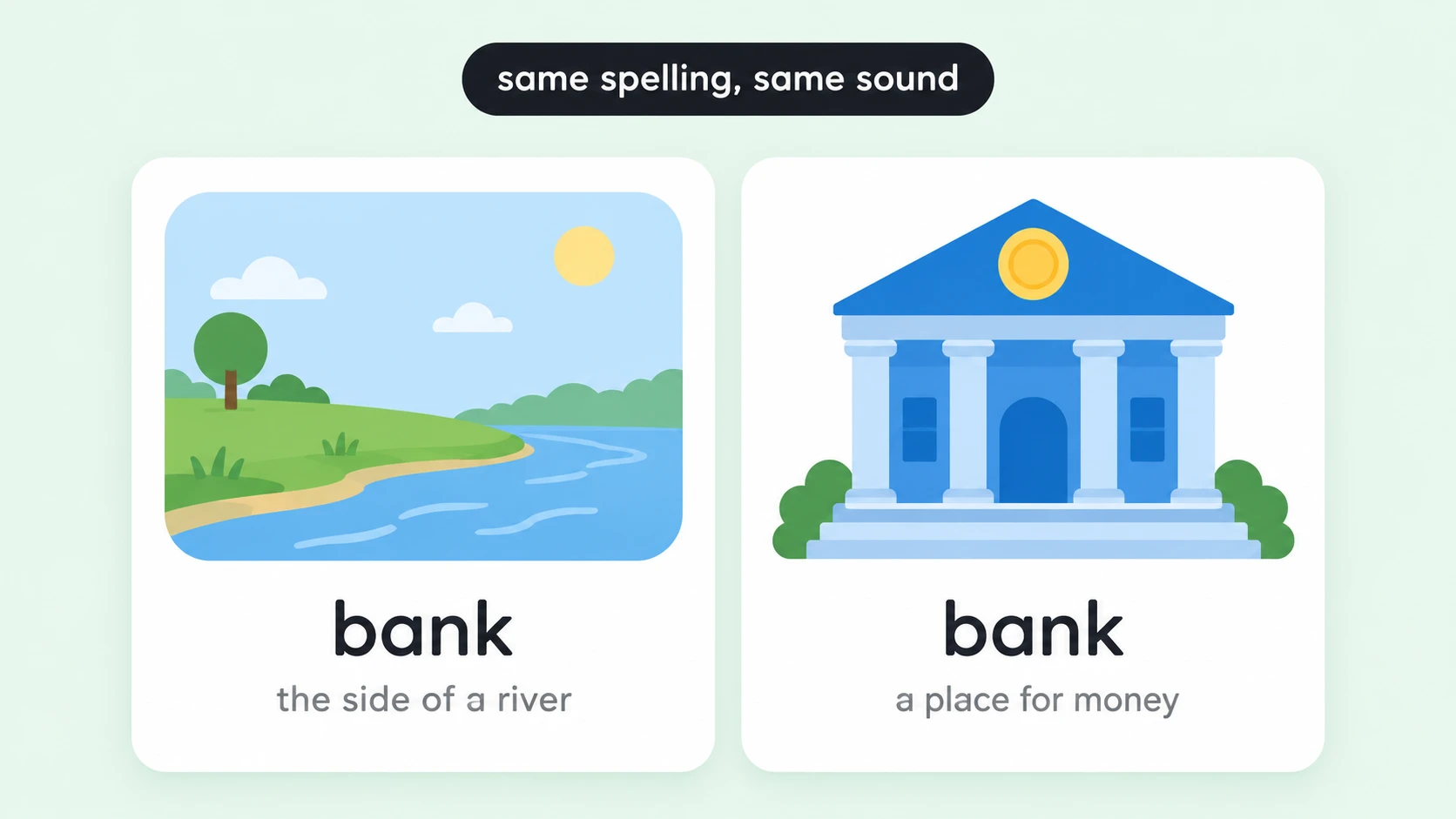
- homonymssame sound and same spelling: a “bat” for cricket and a “bat” that flies at night.
- homographssame spelling, different sound: you “read” a book every day, and you “read” one yesterday; a “tear” in your eye and a “tear” in your shirt.
Common homophones and their meanings
- hear / herehear is what your ears do; here is this place. “Can you hear me? I’m over here.”
- write / rightwrite words with a pen; right means correct, or the opposite of left.
- know / noknow is to have information; no is the opposite of yes.
- knew / newknew is the past of know; new means not old. “I knew she had a new job.”
- buy / by / byebuy is to pay for something; by means next to or done by; bye is short for goodbye.
- weather / whetherweather is rain, sun and wind; whether means if. “I don’t know whether the weather will change.”
- week / weaka week is seven days; weak means not strong.
- meet / meatmeet is to see someone; meat is food from animals.
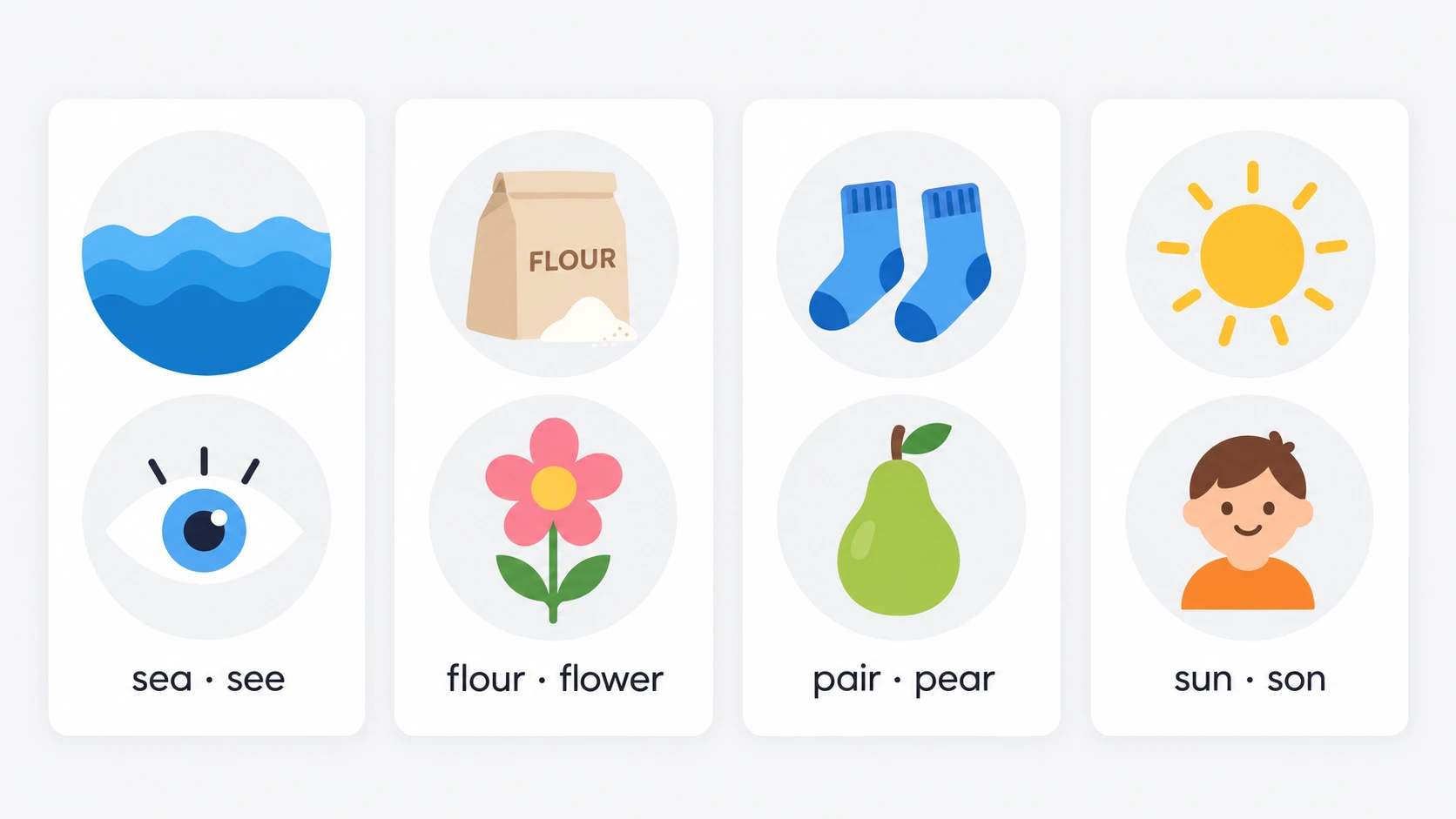
- sea / seethe sea is salt water; see is what your eyes do.
- flour / flowerflour is for baking bread; a flower grows in a garden.
- pair / peara pair is two of something; a pear is a fruit.
- piece / peacea piece is a part of something; peace is the opposite of war.
- plain / planeplain means simple; a plane flies.
- whole / holewhole means all of it; a hole is an empty space.
- wear / wherewear clothes; where asks about a place.
- which / witchwhich asks for a choice; a witch is a woman with magic in stories.
- wait / weightwait is to stay until something happens; weight is how heavy something is.
- hour / ouran hour is sixty minutes; our means belonging to us.
- allowed / aloudallowed means permitted; aloud means so that others can hear.
- brake / breaka car’s brake makes it stop; break means to damage, or a short rest.
- principal / principlea principal is the head of a school; a principle is a rule or belief.
- stationary / stationerystationary means not moving; stationery is paper, pens and envelopes.
Why English has so many homophones
English spelling kept many old spellings while the pronunciation changed, and it took words from French and Latin with their own spellings. So one sound can often be written in several ways. Knowing the patterns tells you which spellings are possible when you hear a word.
- silent kknight / night, know / no, knot / not.
- silent wwrite / right, whole / hole, wrap / rap.
- ee / eameet / meat, week / weak, steel / steal.
- ai / a-e / eighplain / plane, mail / male, wait / weight.
- c / scell / sell, cent / sent.
- numbersone / won, four / for, eight / ate.
There, their and they’re
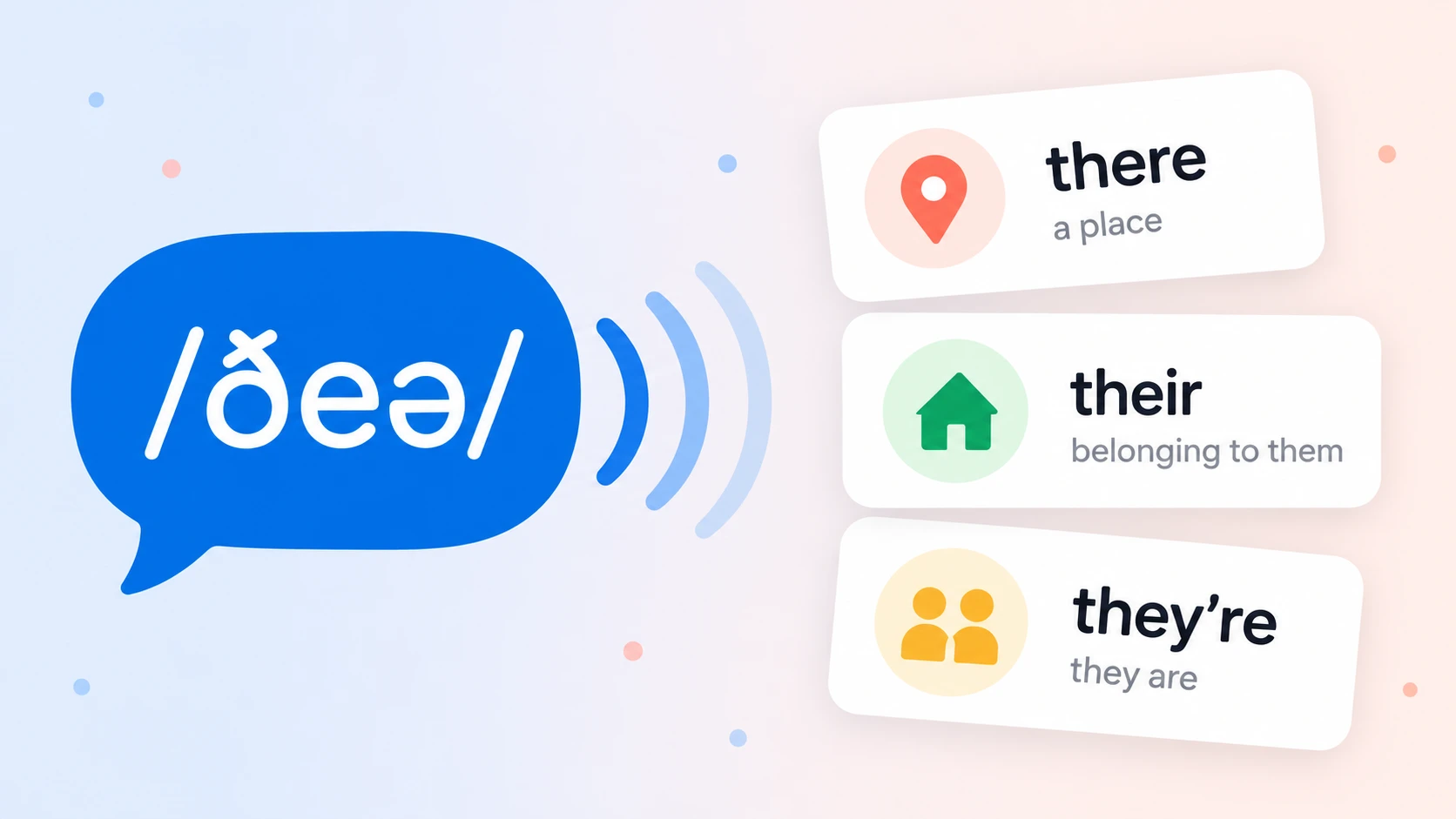
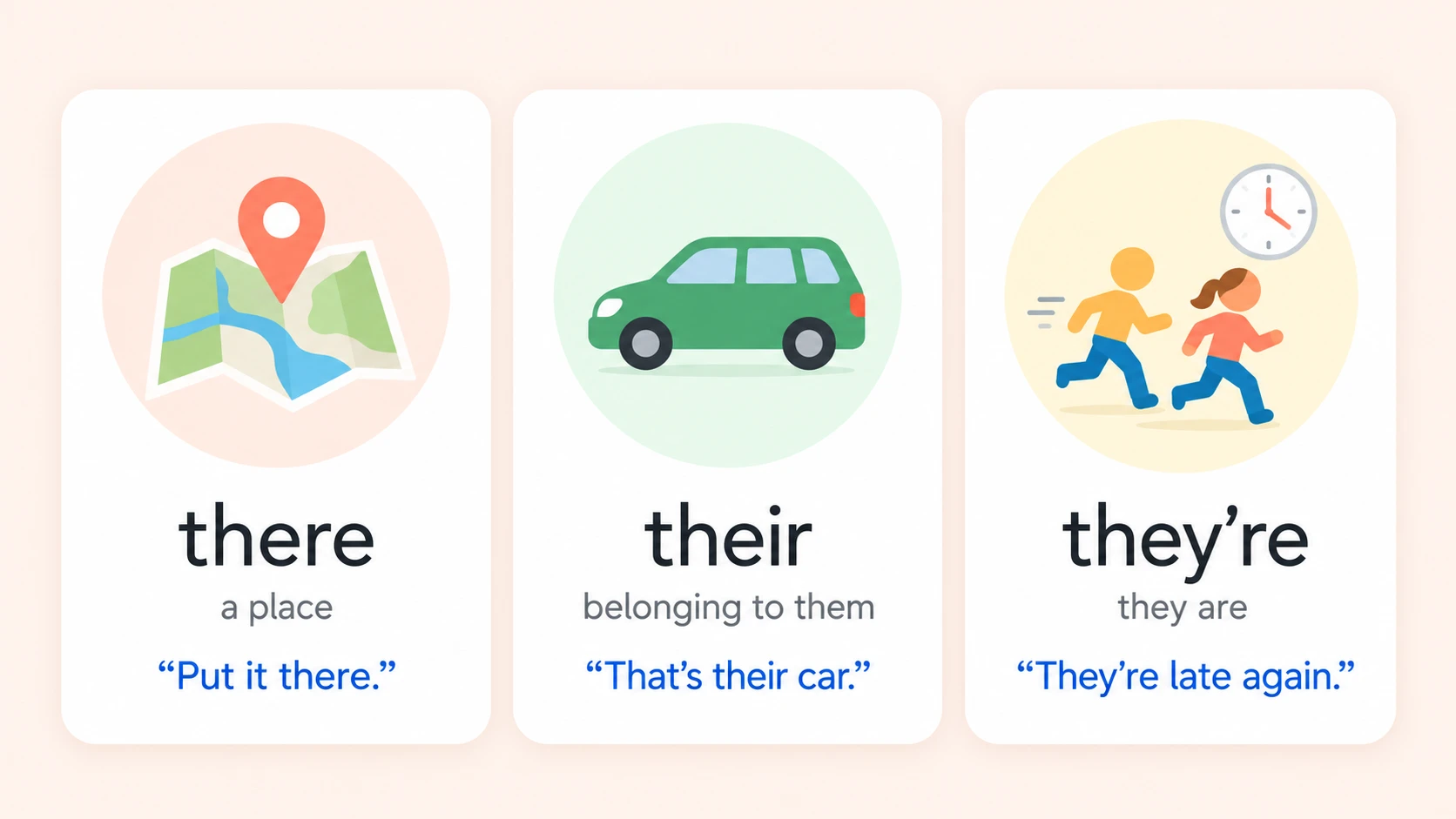
One sentence can use all three, and they sound identical. Press play, then use a trick for each word:
- They’re putting their bags over there.
- therea place, or “there is / there are”. It contains “here”, another place word.
- theirbelonging to them. It contains “heir”, a person who owns things.
- they’rethey are. If “they are” fits the sentence, use the apostrophe.
Your and you’re, its and it’s, whose and who’s
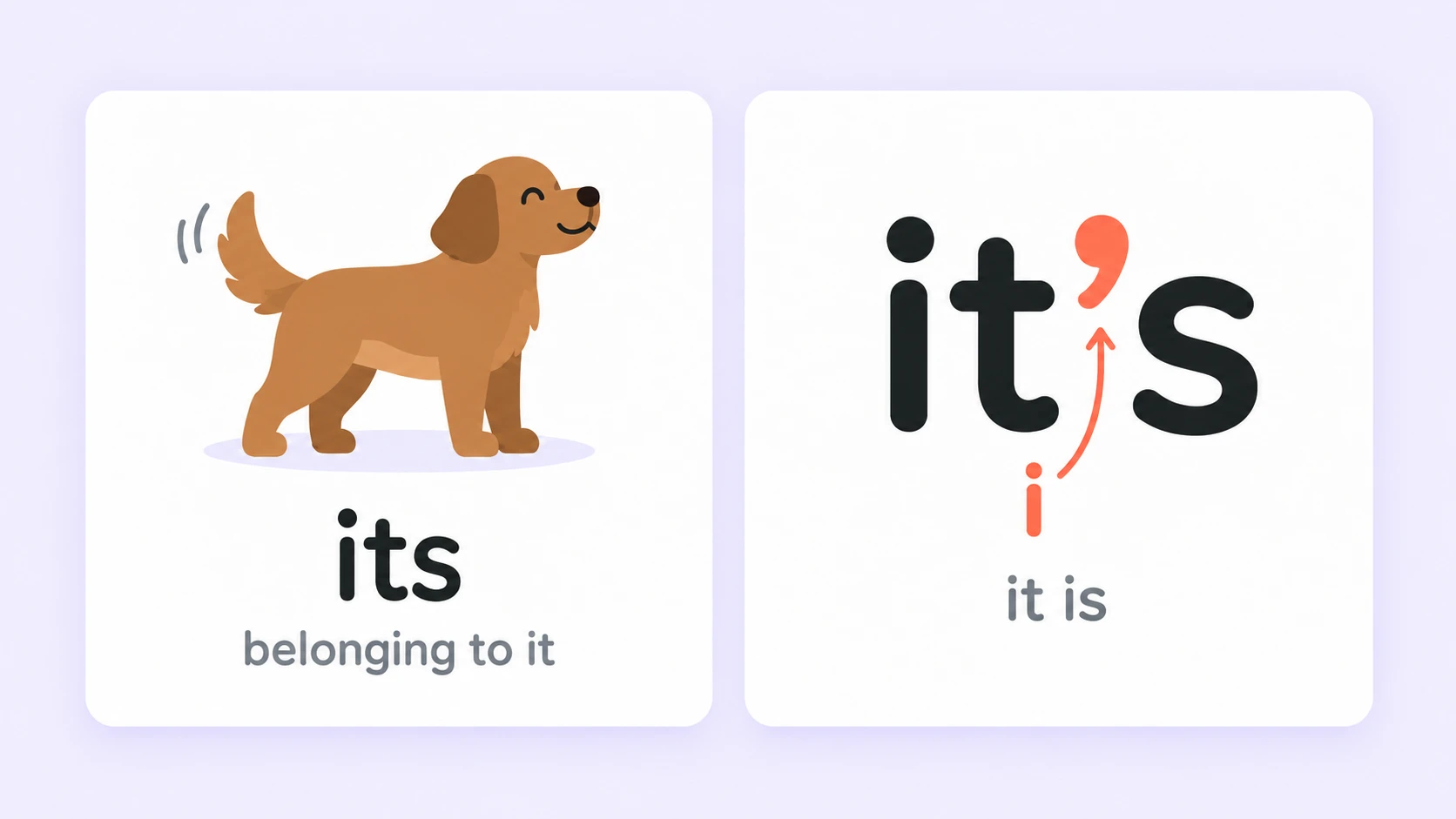
Words that show who owns something never take an apostrophe: his, hers, its, yours, theirs, whose. In these pairs the apostrophe always marks missing letters.
- yourbelonging to you. “Is this your bag?”
- you’reyou are. “You’re right.”
- itsbelonging to it. “The dog wagged its tail.”
- it’sit is or it has. “It’s cold.” “It’s been a long day.”
- whosebelonging to which person. “Whose phone is this?”
- who’swho is or who has. “Who’s calling?”
To, too and two
- totowards a place, or before a verb. “Go to bed.” “I want to sleep.”
- tooalso, or more than enough. “Me too.” “It’s too hot.” It has an extra o: one more than you need.
- twothe number 2. It starts like twin, twelve and twenty.
Words that sound almost the same
Some words are not true homophones, but in fast, relaxed speech they sound alike, and learners often write the wrong one in a dictation.
- then / thanthen is about time (“then we left”); than compares (“taller than me”).
- of / have“could’ve” sounds like “could of”, but the written form is always “could have”.
- accept / exceptaccept means to say yes to; except means but not.
- affect / effectaffect is usually the verb; effect is usually the noun.
- quite / quietquite means fairly; quiet means not loud.
- lose / looselose is the opposite of find; loose means not tight.
Homophones that depend on the accent
Some pairs sound the same only in some accents. In most British accents an r at the end of a syllable is not pronounced, so “sore” and “saw”, “caught” and “court”, and “father” and “farther” sound the same. In many American accents “cot” and “caught” sound the same, and so do “Mary”, “marry” and “merry”. The accent of the speaker can turn two different words into one sound, so the meaning of the sentence decides what you write.
How to choose the right spelling in a dictation
- Listen to the whole sentence before you write the word.
- Decide what kind of word it is: a verb (wait), a noun (weight) or a number (four).
- Expand short forms: if “they are”, “you are” or “it is” fits, write the apostrophe.
- Ask what the sentence is about: a place, an owner, a time or a thing.
- When you finish, read your text once just to check the homophones.
Test yourself
Choose the word that fits each gap, then tap the gap to check.
- I can’t you, the music is too loud. (here / hear)
- We’re going to the cinema. Do you want to come ? (to / too / two)
- The children left coats in the car. (there / their / they’re)
- Turn at the bank. (write / right)
- I’m not sure I can come. (weather / whether)
- The cat is cleaning paws. (its / it’s)
- We waited for an at the station. (our / hour)
- Can I have a of cake? (peace / piece)
Questions about homophones
What are some examples of homophones?
Common ones are hear and here, write and right, buy, by and bye, weather and whether, flour and flower, and piece and peace. The list above gives each pair with its meanings.
Is every homograph a homophone?
No. “Lead” the metal and “lead” the verb share a spelling but not a sound, so they are homographs only. A word is both when spelling and sound match, as with “bat”.
How can I remember which homophone to use?
Look at the job the word does in the sentence, try the full form for any word with an apostrophe, and learn a trick for the pairs you mix up most, such as “here” inside “there”.
Why does a dictation mark my homophone as wrong?
Because the written word means something different. Choosing the right spelling shows you understood the sentence, not only the sound.